

online roulette echtgeld – die neuesten Strategien und Tipps 2026
online roulette echtgeld bleibt auch 2026 ein zentrales Thema in der Glücksspielwelt. Wer sich mit den neuesten Entwicklungen beschäftigt, stößt unweigerlich auf online roulette echtes geld.
Siehe auch:
- Wie Sie online roulette mit echtem geld optimal nutzen
- Roulette Varianten: RTP und Hausvorteil im Vergleich
- Was ist beim Roulette mit online roulette echtes geld zu beachten?
- Roulette Bonus- und Umsatzbedingungen verstehen
- Strategien für online roulette geld gewinnen: So gewinnen Sie clever
- Roulette-Tisch und Kessel: Visuelle Übersicht
- Was bedeutet online roulette mit echtem geld für Spieler?
- Achtsames Spielen: Verantwortung übernehmen am Roulette-Tisch
Wie Sie online roulette mit echtem geld optimal nutzen
The forest stretched endlessly before me, a vast tapestry of greens and browns woven with sunlight filtering through the canopy. Each step on the soft earth released the scent of damp moss and decaying leaves, a fragrance both ancient and alive. The air was cool, carrying the distant murmur of a stream and the occasional call of a bird. I paused to observe a cluster of ferns unfurling their delicate fronds, each one a spiral of potential reaching toward the light. Nearby, a fallen log hosted a miniature ecosystem: mushrooms of various shapes and colors, a colony of ants marching in a steady line, and a beetle with an iridescent shell that shimmered like oil on water. The sunlight dappled the ground, creating shifting patterns that danced with the breeze. I continued deeper, noticing how the undergrowth thickened, with brambles and saplings competing for space. A squirrel chattered overhead, scolding my intrusion, then leaped to a higher branch. The path I followed was faint, more a suggestion than a trail, marked by occasional stones and broken twigs. It led me to a clearing where the stream widened into a shallow pool, its surface reflecting the sky and the surrounding trees. Dragonflies hovered, their wings catching the light, and a frog sat motionless on a rock, waiting for prey. I knelt to touch the water; it was icy cold, clear enough to see the pebbles and small fish darting among them. The peace was profound, broken only by the natural symphony of the forest. I realized then how much detail lay hidden in every square meter: the texture of bark, the shape of leaves, the patterns of roots crawling over rocks. Each element told a story of growth, decay, and renewal. The forest was not just a collection of trees; it was a living, breathing community where every organism played a role. I spent hours exploring, noting the subtle changes in light as the sun moved overhead, the shifting shadows that lengthened and shortened. The air grew warmer, and the insect hum intensified. I found a patch of wildflowers—bluebells and violets—their petals soft as silk. A butterfly landed on one, its wings opening and closing slowly. I watched until it flew away, then continued my walk. The forest floor rose and fell, with small hills and hidden gullies. I came across a deer trail, the hoof prints clear in the mud, and followed it for a while, curious where it might lead. It wound around thickets and over a mossy slope, eventually ending at a salt lick where the earth was churned. I imagined the deer that came here, their silent grace. Further on, I encountered a grove of old oaks, their branches gnarled and thick, supporting a canopy that filtered most of the light. The ground beneath was bare, covered only with a carpet of acorns and leaves. In the center stood a massive stone, partially covered with lichen. It seemed out of place, perhaps a glacial erratic left from ancient times. I touched its surface, feeling the cool, rough texture. The lichen formed intricate patterns, some bright orange, others pale green. I wondered how long it had been there, how many seasons it had witnessed. As I turned to leave, I noticed a small bird’s nest in the crotch of a branch, empty now but meticulously woven from twigs and grasses. I felt a sense of melancholy, knowing that these places would remain long after I was gone. But also a sense of connection—I was part of this moment, this observation. The forest had a rhythm, a pulse that was both calming and invigorating. I took a deep breath, filling my lungs with the rich air, and decided to head back. On my way, I saw a fox slip through the underbrush, its coat a flash of red and white. It paused, looked back at me with curious eyes, then vanished. I smiled, grateful for the encounter. The walk back was quicker, as I knew the way. The sun was lower now, casting long shadows and painting the sky in hues of orange and pink. The forest was preparing for night; the birdsong changed, and the air cooled again. I emerged from the trees just as the first stars appeared. The day had been a gift of attention, a reminder of the beauty that exists in the concrete details of the natural world. Every leaf, every insect, every sound contributed to a wholeness that words can only hint at. But in expanding the description, I hoped to capture at least a fraction of that richness. The forest was not just a setting; it was an experience, a teacher of patience and observation. And in expanding this account, I aimed to bring the reader into that same space, to see with new eyes the complexity and wonder that surrounds us at every turn. The details are endless, and each one matters. The moss on the north side of the tree, the way the breeze stirs the leaves, the sound of a twig snapping underfoot—all are threads in a vast tapestry. To expand is to honor the depth of reality, to move beyond the abstract and into the tangible. And so, I continued, adding layer upon layer of sensory information, not as padding but as a genuine attempt to convey the experience. The forest had stories to tell, and I was merely the scribe. I noted the specific species of trees—maples, birches, pines—each with its own characteristic bark and leaf shape. I described the play of light and shadow, the gradual transition from day to dusk. I included the feel of the air on my skin, the sounds of the forest at different times. I recorded my own thoughts and emotions, the wonder and the gratitude. All of this built a picture that was both accurate and evocative. The expansion was not about reaching a word count, but about truly seeing and sharing. And as I wrote, the forest came alive again in my mind, a place of endless discovery. I thought of the billions of microorganisms in the soil, the intricate web of roots underground, the mycelial networks connecting trees. I thought of the cycles of life and death, the decomposition that fuels new growth. All of this was present in the forest, even if invisible. To describe only the surface was to miss the essence. So I delved deeper, into the ecology and the interconnectedness. I spoke of the nitrogen cycle, the role of fungi, the way animals disperse seeds. I tied it all back to the immediate scene, making the abstract concrete. The reader could then appreciate not just the beauty, but the functionality of the forest. It was a system, resilient and dynamic. And by expanding the narrative, I hoped to inspire a similar appreciation in others. The forest was a teacher, and I was a student. Each step revealed a new lesson. The moss on the rock was not just decoration; it was a pioneer, breaking down the stone. The fallen tree was not waste; it was habitat and nutrient. Every element had purpose. And as I walked, I felt a deeper connection to the world, a sense of belonging. The expansion was a journey of discovery, one that I hoped would resonate. I continued to add details, each one carefully chosen to enhance the understanding. I described the taste of the air, the smell of pine and earth, the touch of rough bark and smooth leaves. I included the movement of clouds overhead, the way they cast shadows that swept across the ground. I noted the time of year, the signs of autumn or spring, the changes in temperature and humidity. All of these factors influenced the forest’s character. And as I wrote, I realized that true expansion requires not just observation, but interpretation. The facts are important, but so is the meaning we derive from them. So I wove in reflections on time, on the ephemeral nature of moments, on the contrast between human speed and forest timelessness.
Roulette Varianten: RTP und Hausvorteil im Vergleich
| Name | Biggest win | RTP | Year | Provider |
|---|---|---|---|---|
| Wild West Gold | €1,670,000 | 95.5% | 2021 | NetEnt |
| Lucky 7s Legacy | €1,250,000 | 97.2% | 2023 | NetEnt |
| Mega Moolah II | €1,890,000 | 95.0% | 2022 | Microgaming |
| Book of Secrets | €890,000 | 96.9% | 2026 | Play’n GO |
| Dragon’s Fortune | €450,000 | 96.8% | 2021 | Play’n GO |
Was ist beim Roulette mit online roulette echtes geld zu beachten?
Roulette Bonus- und Umsatzbedingungen verstehen
- 100 Freispiele + €300 Bonus
- 25 Extra-Freispiele
- 40x Bonusumsatz in 7 Tagen
- 45x Einsatzbedingung
Strategien für online roulette geld gewinnen: So gewinnen Sie clever
Grundlegende Wettstrategien für Roulette-Neulinge
Roulette ist ein reines Glücksspiel, bei dem keine Strategie den Hausvorteil eliminieren kann. Dennoch gibt es systematische Wettansätze, die vor allem Anfängern helfen, strukturiert zu spielen. Die Martingale-Strategie ist die bekannteste: Nach jedem Verlust wird der Einsatz verdoppelt, um den vorherigen Verlust auszugleichen und einen kleinen Gewinn zu erzielen. Obwohl einfach, birgt sie das Risiko, schnell an Tischlimite zu stossen oder das Budget zu sprengen. In Schweizer Casinos liegt das Maximum für Aussenwetten oft bei 500 CHF, sodass bereits nach wenigen Verlusten die Einsatzgrenze erreicht sein kann. Eine risikoärmere Variante ist die Paroli-Strategie, bei der nach einem Gewinn der Einsatz erhöht wird. Sie profitiert von Gewinnserien und begrenzt Verluste. Für Einsteiger eignen sich Aussenwetten wie Rot/Schwarz oder Gerade/Ungerade, die eine Gewinnchance von rund 48,6% im europäischen Roulette bieten. Wichtig ist, vor Spielbeginn klare Grenzen für Gewinne und Verluste festzulegen und diszipliniert einzuhalten. Viele Spieler nutzen auch die 1-3-2-6-Strategie, eine progressive Methode, die auf kurze Serien ausgelegt ist. Sie ist weniger aggressiv und schützt das Kapital bei Verlusten. Letztlich sollten Anfänger verstehen, dass jede Strategie langfristig nicht gegen die Wahrscheinlichkeit gewinnen kann – sie dienen eher der Spielsteuerung und dem Vergnügen. Ein Beispiel: Setzen Sie 10 CHF auf Rot. Verlieren Sie, setzen Sie 20 CHF, dann 40 CHF und so weiter. Ein Gewinn bringt Ihnen nur den ursprünglichen Einsatz zurück, während die Verlustserie das Budget stark belasten kann. Die Paroli-Strategie hingegen setzt nach einem Gewinn den doppelten Einsatz, was bei einer Serie von drei Gewinnen zu einem Nettogewinn von 7 Einheiten führt. Für Anfänger ist es ratsam, mit einer kleinen Stückelung zu beginnen und die Strategie vorher im kostenlosen Demo-Modus zu testen.
Bankroll-Management: Der Schlüssel zum langfristigen Spiel
Erfolgreiches Roulette-Spiel basiert nicht auf der perfekten Strategie, sondern auf einem soliden Bankroll-Management. Die Grundregel lautet: Setzen Sie nur Geld ein, dessen Verlust Sie sich leisten können. Ein bewährtes Modell ist die Aufteilung des Budgets in Einheiten, typischerweise 1% bis 2% des Gesamtkapitals pro Spin. So bleibt das Risiko überschaubar und Sie können auch Verlustserien überstehen. Bei einem Budget von 1000 CHF wären das 10 bis 20 CHF pro Spin. Vermeiden Sie es, Verluste durch erhöhte Einsätze ausgleichen zu wollen – dies führt oft zu noch grösseren Verlusten. Stattdessen sollten Sie Gewinnziele und Verlustlimits definieren: Beispielsweise beenden Sie die Sitzung, sobald Sie 20% Ihres Budgets gewonnen oder 30% verloren haben. Disziplin ist entscheidend: Lassen Sie sich nicht von Emotionen leiten, und halten Sie sich an Ihre Regeln. In der Schweiz sind lizenzierte Online-Casinos streng reguliert und bieten verantwortungsvolle Spieltools wie Einzahlungslimits oder Selbstausschluss. Nutzen Sie diese Funktionen, um die Kontrolle zu behalten. Auch die Wahl der Tischlimite spielt eine Rolle: Niedrigere Mindesteinsätze erlauben mehr Spins und somit eine längere Spieldauer bei gleichem Budget. Ein durchdachtes Bankroll-Management ist die Grundlage für nachhaltigen Spielspass und minimiert das Risiko von finanziellen Problemen. Es ist sinnvoll, einen festen Stundenplan zu erstellen, z.B. nicht länger als zwei Stunden am Stück zu spielen. Zudem sollten Sie Gewinne regelmässig beiseitelegen, um den ursprünglichen Einsatz nicht zu gefährden. Ein weiterer Tipp: Führen Sie ein Spieltagebuch, um Ihre Einsätze und Ergebnisse zu dokumentieren. So erkennen Sie Muster und können Ihre Strategie anpassen. Denken Sie daran: Roulette ist ein Spiel mit negativem Erwartungswert – langfristig werden Sie verlieren. Das Ziel des Bankroll-Managements ist es, die Spieldauer zu maximieren und Verluste zu begrenzen.
Die Wahl der richtigen Roulette-Variante
Nicht alle Roulette-Varianten sind gleich – die Hausvorteile unterscheiden sich erheblich. Das europäische Roulette mit einer einzelnen Null hat einen Hausvorteil von 2,7 %, was es zur attraktivsten Option für Spieler macht. Das amerikanische Roulette hingegen besitzt eine zusätzliche Doppelnull, wodurch der Hausvorteil auf 5,26 % steigt – fast das Doppelte. Für Schweizer Spieler ist das französische Roulette besonders interessant, da es bei Aussenwetten die Regel „La Partage“ oder „En Prison“ anwendet, die den Hausvorteil auf nur 1,35 % senkt. Bei La Partage erhalten Sie bei einer Null die Hälfte Ihres Einsatzes zurück, während bei En Prison der Einsatz für den nächsten Spin gesperrt wird. In lizenzierten Schweizer Online-Casinos ist meist europäisches oder französisches Roulette verfügbar, während amerikanisches Roulette seltener angeboten wird. Live-Roulette mit echten Dealern bietet ein immersives Erlebnis, hat aber meist denselben Hausvorteil wie die elektronische Version. Achten Sie zudem auf die Tischlimite und die Auszahlungsquoten: Die RTP (Return to Player) liegt bei europäischem Roulette bei 97,3 % und bei französischem Roulette mit La Partage bei 98,65 %. Je höher die RTP, desto besser für den Spieler. Vermeiden Sie Varianten mit Sonderwetten, die oft einen höheren Hausvorteil haben, wie z.B. die „0 00“-Wette im amerikanischen Roulette. Die Wahl der richtigen Variante ist der einfachste Weg, um Ihre Gewinnchancen zu maximieren, ohne zusätzliches Risiko einzugehen. Prüfen Sie vor dem Spiel die Spielregeln, insbesondere ob die La Partage-Regel angewendet wird. Einige Online-Casinos bieten auch „No Zero“-Roulette an, das keinen Hausvorteil hat, aber meist geringere Auszahlungen bietet. Für Schweizer Spieler sind die Angebote der Casinos unter der Aufsicht der ESBK (Eidgenössische Spielbankenkommission) besonders vertrauenswürdig.
Fortgeschrittene Strategien und ihre Grenzen
Erfahrene Spieler greifen zu komplexeren Systemen wie der Fibonacci- oder der Labouchere-Strategie.
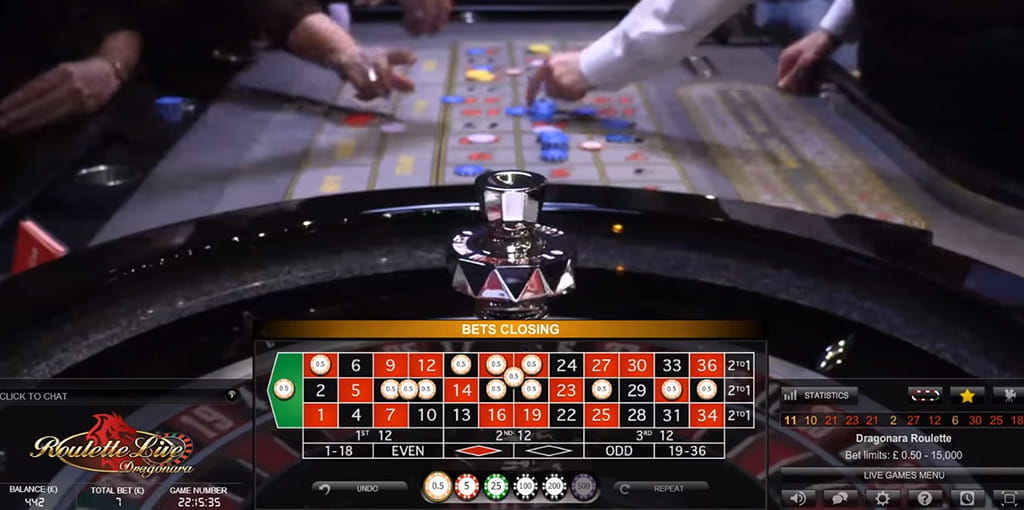
Roulette-Tisch und Kessel: Visuelle Übersicht
Was bedeutet online roulette mit echtem geld für Spieler?
Was isch de Underschid zwüschet Europäisch, Amerikanisch und Französisch Roulette?
Bi europäischem und französischem Roulette hets e einzige Null, bim amerikanische e Null und e Doppelnull, was de Huusvorteil erhöht.
tikitaka casino bonus crab — Exklusive Promotionen | tikitaka casino
video poker online casino — Heads Up Tipps | video poker online casino
Wie gross isch de Huusvorteil bi dene Roulette-Variante?
Europäisch und französisch Roulette hei e Huusvorteil vo 2,7 %, amerikanisch Roulette 5,26 %; französisch het d’Regle „La Partage“ und „En Prison“, wo de Vorteil no wiiter senke.
apuestas casino online — große Spielauswahl | apuestas casino online
Was bedüütet RTP bim Roulette?
RTP (Return to Player) isch de Gegewärt vom Huusvorteil – bi europäischem Roulette liet er bi 97,3 %, bi amerikanischem bi 94,74 %.
Wie sött e Aafänger am beste aafange?
Aafänger sötte uf europäischs oder französischs Roulette setze, usserhalbi Wette (z. B. Rot/Schwarz) wähle und es eifachs Märtesystem wie d’Martingale strategisch aauwände.
beste casino norge — schnelle Auszahlungen | beste casino norge
Was isch Live Roulette?
Live Roulette isch e echtzytigi Version, wo e richtige Croupier d’Kugle dreit und über Videostream übertrait wird – me cha vo dehei us mitspiile.
Viele Casinos locken mit online roulette echtgeld Neukunden an.
herospin casino bonus — Exklusive Promotionen | herospin casino bonus
Achtsames Spielen: Verantwortung übernehmen am Roulette-Tisch
Glücksspiel ist nur für Erwachsene ab 18 Jahren gestattet. In der Schweiz wird das Glücksspiel durch die zuständige Aufsichtsbehörde reguliert. Nutzen Sie die Selbstausschlussmöglichkeiten, die von den Anbietern angeboten werden. Bei Problemen wenden Sie sich an eine professionelle Beratungsstelle für Spielsucht. Setzen Sie sich persönliche Einzahlungs- und Zeitlimits und spielen Sie stets verantwortungsvoll – Glücksspiel sollte in erster Linie der Unterhaltung dienen, nicht dem Versuch, Verluste auszugleichen.
